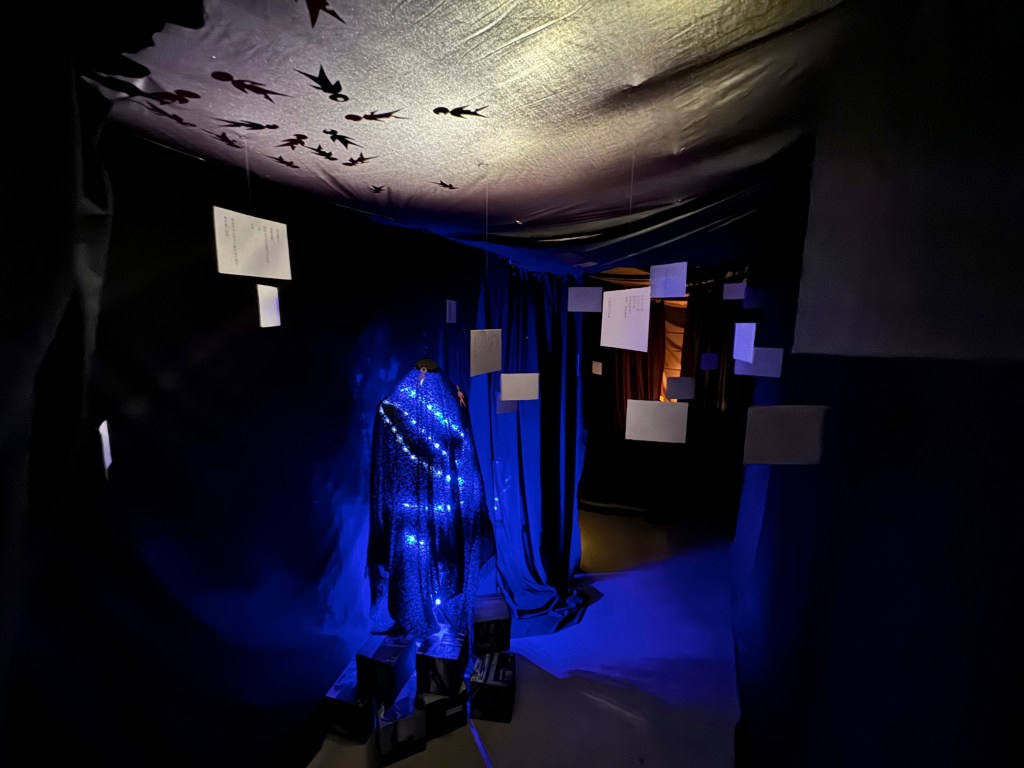
你是否有過什麼遺憾? 也許有些人後悔自己沒跟重要的人說出想說的話,又或是早該做怎麼樣的事。 遺憾都是建立在「要是當時⋯⋯」上,但如果⋯⋯ 如果我們忘記自己曾經沒有做到什麼事、後悔過什麼事時,遺憾還會存在嗎?
Have you ever had any regrets? Maybe some people regret not saying what they wanted to someone important, or wish they had done something sooner. Regret is built on “if only back then…” But what if—if we forget the things we didn’t do or the things we once felt sorry about—would those regrets still exist?
還是說「遺忘」本身就是一種遺憾呢? 當我們感覺到遺憾時,情緒會告訴我們「那應該是失落和悲傷」 但如果哪一天⋯⋯我們失去了情緒,那我們是否就將無法感知到遺憾呢? 還是說「空虛」本身就是一種遺憾?
Or is “forgetting” itself a kind of regret? When we feel regret, our emotions tell us it should feel like loss and sadness. But if one day… we lost our emotions, would we then be unable to perceive regret? Or is “emptiness” itself a form of regret?
《遺落》是個空間性作品,其中包含多感聯覺:聽、視、觸、嗅、感受與想像⋯等,分別對應無始無終的音樂、環境佈置、燈光、破洞紙片人、裸視3D裝置、詩詞、軟布、自調香氛、觀展者感受⋯等。
“Lost” is a spatial work incorporating multisensory synesthesia—hearing, sight, touch, smell, feeling, and imagination—mapped onto endless music, environmental mise-en-scène, lighting, torn paper figures, glasses-free 3D installations, poetry, soft fabrics, custom-crafted fragrances, and the viewer’s own responses.
此作品的概念發想源自一本小說《遺憾收納員》——探討遺憾的短篇故事。書中一句話「寄出遺憾,重要的是你想告訴對方些什麼,而不是希望對方回覆了你什麼,不是嗎?」我的解讀是「過去犯的錯已無法修正了,與其想著彌補不可能解決的過往,不如試著原諒自己。」這句話便是我創作《遺落》的發想動機。
The concept for this work was inspired by a novel titled The Regret Collector—a collection of short stories exploring regret. One line in the book says, “When you send out a regret, what matters is what you want to tell the other person, not what you hope they’ll reply with, right?” I interpret it as: “The mistakes of the past can’t be undone. Rather than dwelling on fixing what can’t be fixed, try forgiving yourself.” That sentence became the creative spark for Lost.
在書中,可以將忘記說的一句話、一個物品寄回已離世的人身旁,但仍不能改變對方消失的事實。這是一種原諒自己的方式,而我則是利用「創作」來原諒/療癒自己。這件作品旨在使欣賞它的觀眾能回到自己記憶中的深處,原諒曾犯下的過錯。
In the book, you can send a forgotten sentence or an object back to someone who has passed away, yet you still can’t change the fact that they’re gone. It’s a way of forgiving yourself, and I use “creation” to forgive/heal myself. This work is meant to guide its viewers back into the depths of their own memories to forgive the mistakes they once made.
作品整體是個昏暗的環境,但香氣、微弱的光源與安定的音樂,讓人感到漂浮卻安心的氛圍。也許有時無法屏蔽所有腦內的聲音,但我們可以試著躺在它們之上,任由它們漂流。作品末端的空間則擺著一面纏繞封鎖線的鏡子、及一個可以讓人創作詩詞、書寫回憶的空間,看著鏡子反思,什麼是自己不想讓人看見的事?在這裡你可以放心的接受它,沒有人會評價你,並將這些創作成詩詞,也許能嘗試原諒自己。
The piece is set in a dim environment, but the scents, faint light, and steady music create a floating yet comforting atmosphere. Sometimes we can’t shut out all the voices in our heads, but we can try lying above them and let them drift. At the end of the installation sits a mirror wrapped in caution tape and a space for composing poetry and writing memories. Gazing into the mirror, you reflect on what you’ve hidden from others. Here you can safely accept it—no one will judge you—and turn those feelings into verse. Maybe, in doing so, you can begin to forgive yourself.
「擁有遺憾也沒關係、不完美也沒關係。當所有人都追求自身完美時,我們便無法區分彼此,也正因為我們擁有屬於我們的經驗、體會、感受,才造就我們的遺憾、造就我們的獨特」,這便是作品中隨處可見的破洞紙片人所傳遞的意義。
“It’s okay to have regrets, it’s okay to be imperfect. When everyone chases their own perfection, we lose the ability to distinguish one another. It’s precisely because we carry our own experiences, insights, and feelings that we have regrets—and that makes us unique.” This is the meaning conveyed by the torn-paper figures scattered throughout the work.
音樂在其中扮演著相當重要的角色,沈浸後就理所當然的存在,它連結所有感官、並搭建起一座將你通往「潛意識」的橋樑。
Music plays a vital role—it becomes natural once you’re immersed. It ties together all the senses and builds a bridge that leads you into the subconscious.
歡迎聆聽與欣賞。
Welcome to listen and watch.
—- Created at age 16 —-
一小時安眠音樂版 One-Hour Sleep Music Edition:
 Osmond Chen's Music
發表留言